The Revenue-Driven Customer Success Resume: Writing About Retention Without the Fluff
The Revenue-Driven Customer Success Resume: Writing About Retention Without the Fluff
In subscription software (SaaS), Customer Success is no longer just about making customers happy—it is a core driver of commercial growth and company valuation. Yet, many Customer Success Manager (CSM) resumes read like generic relationship summaries, using phrases like "relationship builder" or "customer advocate".
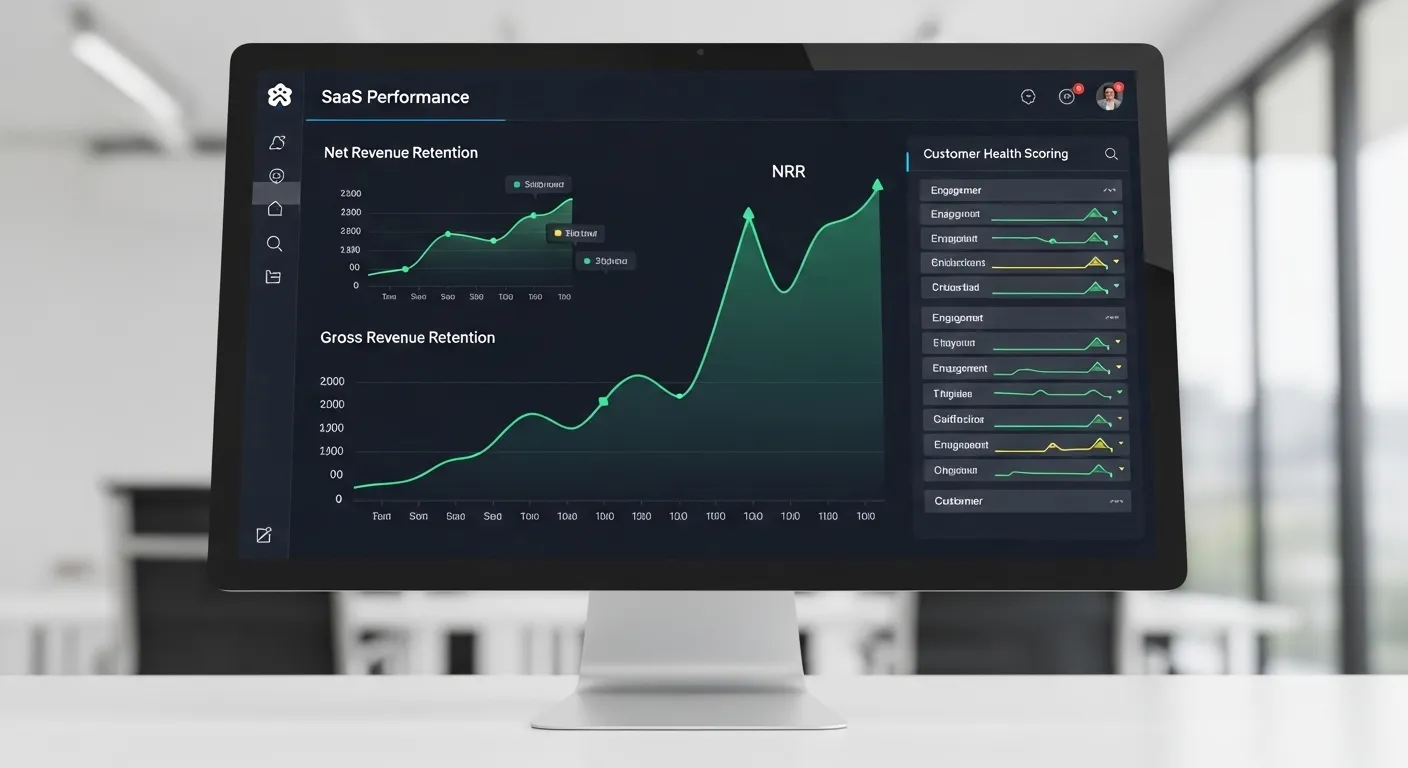
To land elite roles at top-tier companies, you must demonstrate your direct impact on revenue using metrics like Net Revenue Retention (NRR), Gross Revenue Retention (GRR), and Customer Lifetime Value (CLV).
It should show that you protect and grow recurring revenue.
Retention, expansion, churn prevention, and time-to-value matter more than vague relationship language.
Why revenue language matters in Customer Success
Customer Success in SaaS is judged increasingly through a commercial lens. That means your resume should sound less like a service summary and more like a revenue, retention, and risk-management document.
Generic CSM language vs revenue-driven CSM language
| Weak framing | Stronger framing |
|---|---|
| Relationship builder | Managed a defined book of business with measurable retention results |
| Customer advocate | Reduced churn risk and improved renewal outcomes across a portfolio |
| Drove customer happiness | Improved NRR, GRR, engagement, and time-to-value |
| Helped accounts renew | Protected ARR and expanded account value through proactive management |
If you improved adoption, onboarding, renewals, or executive alignment, connect it to retention, revenue protection, or expansion.
That is the language senior hiring teams expect.
Showcase your commercial portfolio
Always start your experience by establishing the scale of your portfolio.
Before: Managed a large portfolio of SaaS accounts and drove renewals.
After: Stewarded a $4.2M ARR account portfolio, maintaining a 95% gross revenue retention rate and driving a 14% improvement in Net Revenue Retention through proactive account management.
The point is not just to say that you managed customers. It is to show the value of the book of business, the retention quality of that portfolio, and the commercial result of your work.
Portfolio language that adds instant credibility
| Better element to include | Why it helps |
|---|---|
| ARR or book of business size | Shows commercial scope |
| Number or segment of accounts | Clarifies complexity and customer mix |
| GRR or NRR | Signals retention performance |
| Expansion or upsell contribution | Shows growth impact, not just maintenance |
A hiring manager should not have to guess whether you handled SMB, mid-market, or enterprise accounts.
Show the size and type of the portfolio up front.
Write about your risk mitigation playbooks
Show how you proactively manage at-risk accounts instead of waiting for renewal dates.
Built a proactive churn-risk workflow in Gainsight using usage data, which flagged at-risk accounts 90 days before renewal and saved $1.2M in ARR.
This framing is stronger because it shows process, system thinking, and financial impact all at once. It also positions you as someone who anticipates revenue risk instead of reacting to it too late.
Reactive renewal management vs proactive risk management
| Reactive approach | Proactive approach |
|---|---|
| Checked in before renewal date | Built workflows that surfaced risk earlier |
| Managed customer issues as they arose | Used usage data and health signals to flag churn patterns |
| Focused on conversations only | Combined account strategy with systems and playbooks |
| Reported risk | Prevented revenue loss |
Highlight onboarding and onboarding frameworks
Customer churn is often decided in the first 90 days. Highlight how you speed up time-to-value.
Created customized onboarding playbooks based on customer segmentation, cutting Time-to-Value (TTV) by 41% and boosting average platform engagement to 92% in the first 60 days.
Strong onboarding bullets prove that you understand early lifecycle value, not just renewals. Faster activation, higher engagement, and better segmentation all support stronger long-term retention.
Onboarding metrics worth mentioning
If they are real and defensible, these are the kinds of onboarding metrics that make a CSM resume stronger:
- Time-to-Value (TTV)
- Product engagement in the first 30, 60, or 90 days
- Onboarding completion rate
- Early renewal health indicators
- Adoption of key features
- Churn reduction tied to onboarding improvements
- ARR managed
- GRR
- NRR
- CLV impact
- Churn saved or reduced
- Expansion revenue
- TTV improvement
- Adoption or engagement lift
More Customer Success bullet upgrades
| Before | After |
|---|---|
| Managed renewals for customer accounts | Managed a $4.2M ARR portfolio while maintaining strong gross retention and improving net retention |
| Helped save at-risk accounts | Built a churn-risk workflow that identified high-risk accounts 90 days before renewal and protected ARR |
| Onboarded new customers | Built segmented onboarding playbooks that reduced TTV and improved early engagement |
| Worked with Gainsight | Used Gainsight usage data and workflows to identify risk and improve renewal readiness |
Sample resume: Customer Success Manager
Customer Success Manager with SaaS experience managing commercial portfolios, reducing churn risk, and improving retention through proactive lifecycle strategy. Known for connecting onboarding, adoption, and executive account management to measurable revenue outcomes.
- Stewarded a $4.2M ARR account portfolio, maintaining a 95% gross revenue retention rate and driving a 14% improvement in Net Revenue Retention through proactive account management
- Built a proactive churn-risk workflow in Gainsight using usage data, flagging at-risk accounts 90 days before renewal and saving $1.2M in ARR
- Created customized onboarding playbooks based on customer segmentation, cutting Time-to-Value by 41% and boosting average platform engagement to 92% in the first 60 days
- Partnered with sales, support, and product teams to improve renewal readiness and customer adoption across strategic accounts
- Managed a portfolio of SaaS customers across onboarding, adoption, and renewal cycles
- Facilitated success planning and account reviews to improve engagement and identify growth opportunities
- Supported retention efforts by tracking health indicators and escalating risk signals early
Customer Success, NRR, GRR, CLV, ARR, Renewal Management, Churn Prevention, Gainsight, Onboarding, Time-to-Value, Adoption Strategy, QBRs
Phrases like "relationship builder" or "customer advocate" are not useless, but they are too weak on their own.
Pair them with retention, expansion, onboarding, or revenue outcomes if you want them to carry weight.
FAQ
What metrics should a Customer Success resume include?
The strongest metrics usually include ARR managed, NRR, GRR, churn reduction or churn saved, expansion revenue, CLV impact, and Time-to-Value improvements. These make retention work feel commercial and measurable.
How do I make a Customer Success resume sound more strategic?
Lead with portfolio scale, revenue impact, and lifecycle outcomes. Show how you prevented churn, improved onboarding, and increased retention rather than just maintaining relationships.
Should I mention tools like Gainsight on a CSM resume?
Yes, but only when tied to outcomes. It is more effective to show how you used Gainsight to flag risk, improve adoption, or save ARR than to list it without context.
Why does Time-to-Value matter on a Customer Success resume?
Because early onboarding and adoption often shape whether customers renew. If you reduced TTV or improved early engagement, that is a strong signal of retention impact.
What is the biggest mistake on a Customer Success resume?
The biggest mistake is using soft, generic language without commercial proof. A strong CSM resume connects customer work to retention, expansion, risk reduction, and revenue protection.